Patrick MosePhD

Work & Impact

Design decisions, and what they made possible.

These are not project summaries. Each case study walks through the problem, the thinking behind the approach, what we actually did, and what I would carry into the next one.

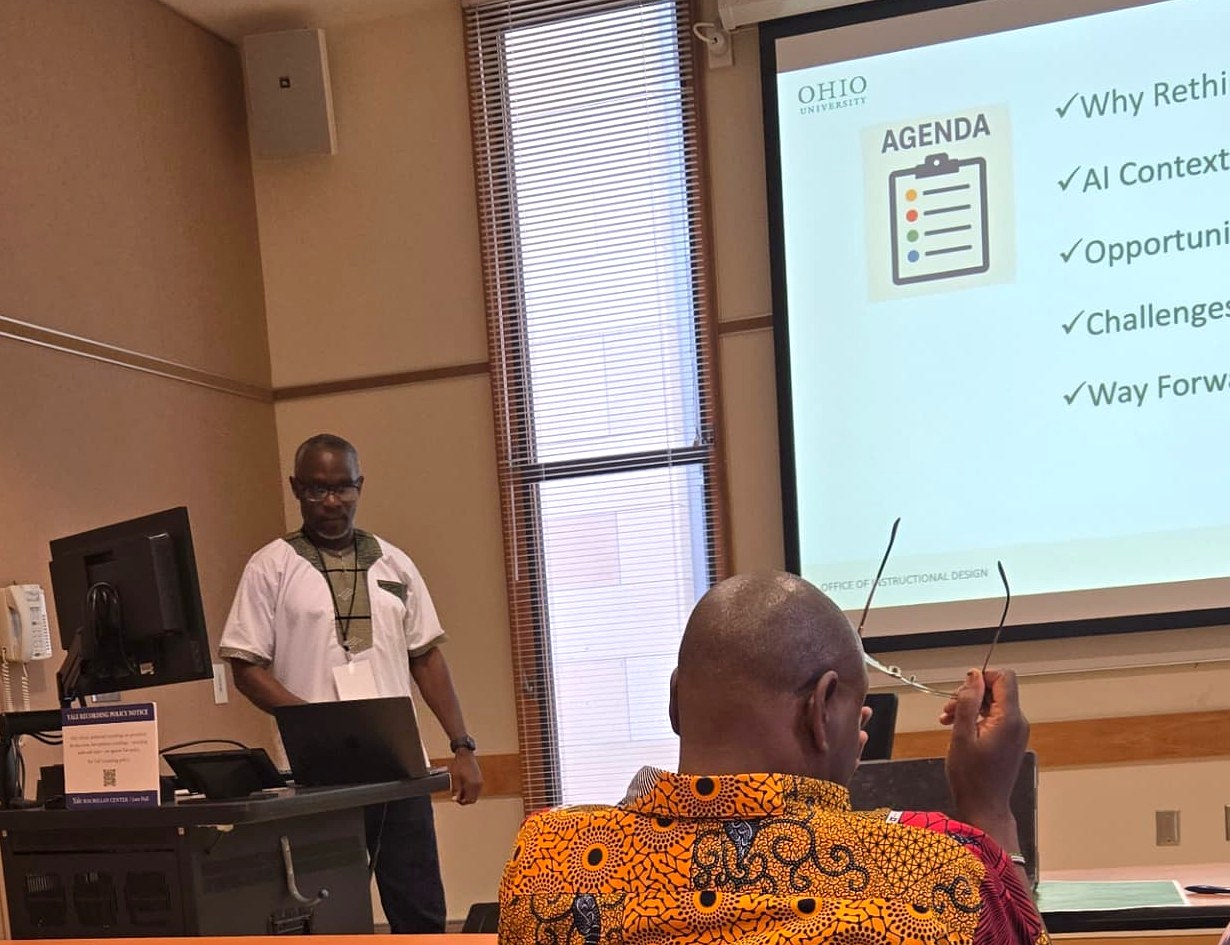
Patrick Mose presenting at the podium beside the workshop agenda slide

Practice in Context

Working with educators, not simply for them

Strong learning design grows through partnership—bringing together disciplinary expertise, evidence-informed design, useful technology, and the lived realities of educators and learners.

Learning Strategy

Online Program Redesign Strategy

A program-level approach to redesigning online courses around shared outcomes, consistent structure, and sustainable faculty practice.
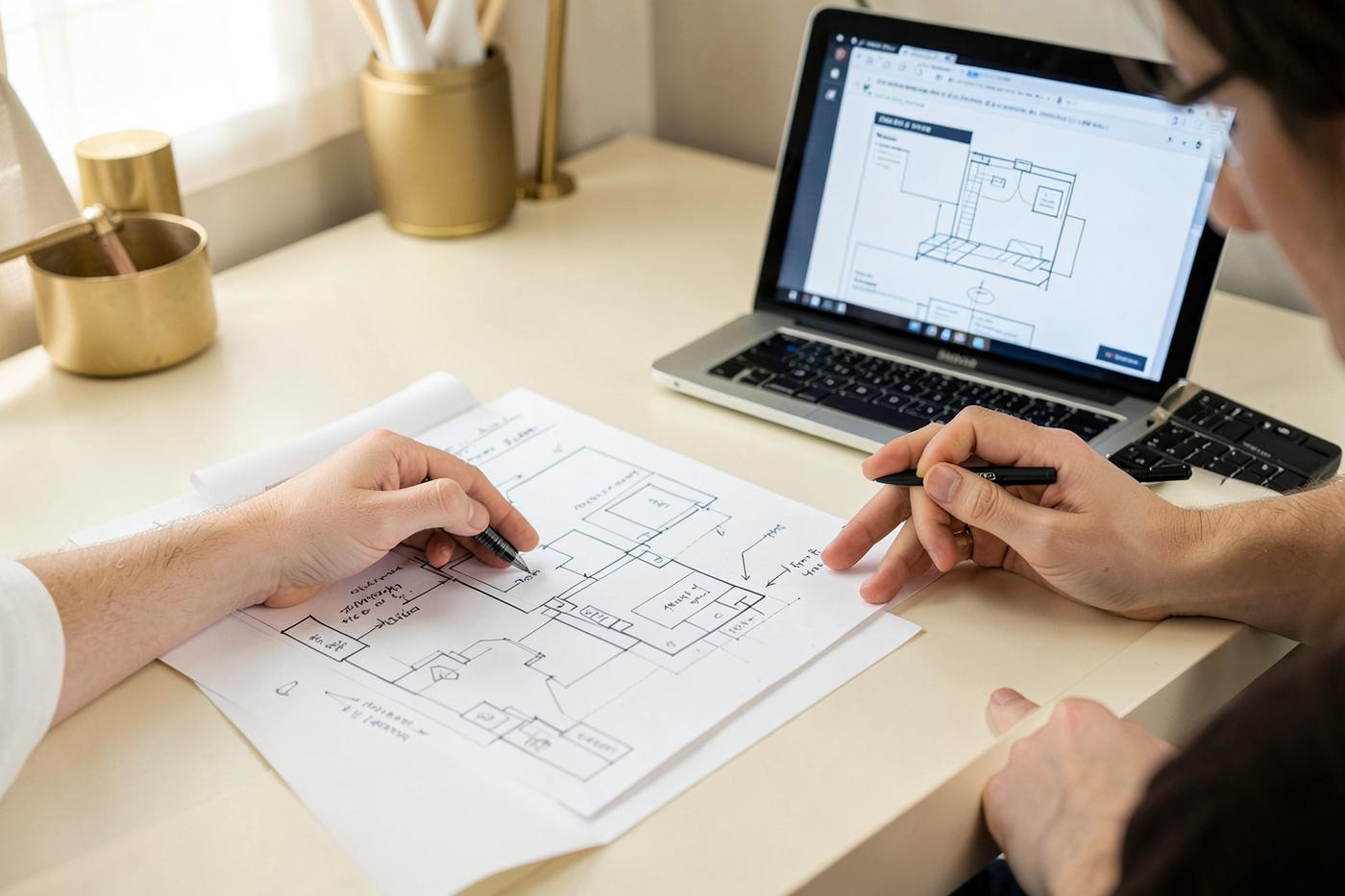
Course designer sketching a program redesign map beside a laptop

Challenge

Online programs often grow course by course, leaving learners with inconsistent structure, uneven workload, and unclear pathways through the curriculum.

Context

Higher-education online and blended programs supported through a centralized instructional design partnership with faculty and academic leadership.

My Role

Senior Instructional Designer and learning strategist partnering with faculty leads, program directors, and cross-functional teams.

Strategy

Move from course-by-course production to program-level design: establish shared outcomes, a common course architecture, and a repeatable review cycle that faculty can sustain after the project ends.

What We Did

  • Facilitated outcome mapping sessions with faculty and program leadership
  • Established a consistent course template and navigation structure
  • Aligned assessments and activities to program-level competencies
  • Built faculty-facing documentation and design guidance
  • Created a review cadence for continuous improvement

Impact

  • Established an institutional approach to program audit, prioritization, redesign scheduling, implementation, and continuous improvement
  • Created a foundation for sustainable multi-year program review cycles
  • Contributed to team outcomes of 185 courses designed or redesigned in FY 2025–26, an estimated $2.7M in institutional cost savings against external development benchmarks

What I Learned

Program-level design succeeds when faculty ownership is designed in from the beginning. The structures that survive are the ones instructors help build.


Quality & Assessment

OSCQR Quality Review & Continuous Improvement

Using a recognized online course quality rubric as a shared language for review, prioritization, and iterative improvement.

Desk with course review notes, journals, and a laptop

Challenge

Quality review can feel evaluative rather than developmental, which limits how much faculty engage with the findings.

Context

Online course review work supported by instructional design staff in collaboration with instructors and academic units.

My Role

Reviewer, facilitator, and design partner translating rubric findings into practical revision plans.

Strategy

Reframe the rubric as a conversation tool: review collaboratively, prioritize a small number of high-leverage changes, and revisit on a cycle.

What We Did

  • Conducted structured course reviews using the OSCQR rubric
  • Translated findings into prioritized, actionable revision plans
  • Coached faculty through accessibility and alignment improvements
  • Documented recurring patterns to inform broader design guidance

Impact

  • Reviewed 13 courses in the Innovative Learning Design master’s program
  • Strengthened reviewer guidance and faculty-facing feedback tools so recommendations were clearer, more consistent, and actionable

What I Learned

A rubric is most useful as a shared vocabulary. When review feels developmental, instructors return to it voluntarily.

Faculty Development

Teaching Online Faculty Resources

A self-paced resource ecosystem that helps instructors design, facilitate, and improve online teaching on their own timeline.

Educators collaborating around a table during a faculty workshop

Challenge

Faculty need support at the moment of design, not only during scheduled training sessions.

Context

Institution-wide support for instructors teaching online and in blended formats.

My Role

Designer and author of faculty-facing resources, guides, and self-paced learning materials.

Strategy

Build modular, searchable resources anchored in pedagogy rather than tool mechanics, so guidance stays relevant as technologies change.

What We Did

  • Designed self-paced modules and practical how-to guidance
  • Created templates instructors could adapt directly into their courses
  • Paired written resources with live workshops and consultations
  • Maintained and updated resources as platforms evolved

Impact

  • Built a scalable faculty resource ecosystem spanning guides, multimedia, microlearning, FAQs, pedagogy, assessment, and instructional technology
  • Connected self-paced resources with live workshops and consultation
  • Part of a team producing 1,200+ learning objects and 1,000+ course-design meetings in FY 2025–26

What I Learned

Instructors adopt guidance that respects their time. Short, specific, pedagogy-first resources travel further than comprehensive manuals.

Innovation

AI in Education & Faculty Development

Helping educators move from uncertainty to informed, intentional practice with generative AI in teaching, design, and assessment.

Abstract network of light points over a green and cream gradient

Challenge

Generative AI arrived faster than institutional guidance, leaving educators to weigh opportunity, integrity, and equity at the same time.

Context

Faculty development and instructional design support across disciplines.

My Role

Workshop designer, facilitator, and advisor on practical and responsible AI use in learning.

Strategy

Start with teaching problems rather than tools: use AI where it expands what educators and learners can accomplish, and name clearly where it does not belong.

What We Did

  • Designed and facilitated AI-in-education workshops for faculty
  • Developed practical use cases for design, feedback, and assessment rethinking
  • Addressed academic integrity, bias, privacy, and accessibility considerations
  • Supported course-level policy and assessment redesign conversations

Impact

  • Translated generative AI into practical applications for design, assessment, academic integrity, and learner engagement
  • Extended the work through faculty development, research, conference presentations, and panel programming

What I Learned

Educators do not need to be convinced about AI; they need space to think clearly about it alongside people who take both the promise and the risks seriously.

Assessment

Canvas Outcomes & Assessment

Making outcomes assessment usable inside the learning platform instructors already work in every day.

Laptop showing a learning module structure beside handwritten notes

Challenge

Outcomes data is often collected separately from teaching, creating duplicate work and limited insight.

Context

Course- and program-level assessment work in Canvas.

My Role

Instructional designer configuring outcomes, rubrics, and reporting workflows with faculty.

Strategy

Embed outcomes into the assignments and rubrics instructors already use, so assessment evidence is a by-product of good teaching.

What We Did

  • Configured outcomes and aligned rubrics in Canvas
  • Trained faculty on rubric-based assessment workflows
  • Supported reporting and interpretation of outcomes data

Impact

  • Connected program outcomes, course outcomes, learning activities, assessments, and Canvas-based evidence of learning
  • Developed professional learning focused on outcomes alignment and assessment strategy

What I Learned

Assessment systems succeed when they reduce, not add, effort for the people closest to students.

Curriculum

Program Outcomes & Competency Mapping

Curriculum mapping that shows where competencies are introduced, reinforced, and demonstrated across a program.

Research desk with stacked journals and handwritten mapping notes

Challenge

Programs frequently cannot show where a stated competency is actually taught and assessed.

Context

Academic program review and curriculum design collaborations.

My Role

Facilitator and designer of mapping processes and artifacts.

Strategy

Make the curriculum visible. A shared map turns abstract debate into a concrete conversation about gaps and redundancy.

What We Did

  • Facilitated faculty mapping workshops
  • Produced curriculum maps and gap analyses
  • Connected mapping outputs to course-level redesign work

Impact

  • Supported academic programs in mapping competencies and outcomes across courses, activities, assessments, and evidence
  • Made alignment and curricular gaps visible to faculty and program teams

What I Learned

Visibility changes behavior. Faculty rarely disagree about quality once they can see the whole curriculum at once.

Innovation

Learning Innovation Projects

Exploratory work with emerging tools and formats, evaluated by learning value rather than novelty.

Abstract representation of connected ideas and emerging technology

Challenge

Innovation efforts stall when they are led by tools instead of by learning goals.

Context

Pilot projects and exploratory initiatives in digital learning.

My Role

Designer, pilot lead, and evaluator.

Strategy

Pilot small, document honestly, and scale only what demonstrably improves the learning experience.

What We Did

  • Scoped and ran small pilots with volunteer instructors
  • Documented design decisions and trade-offs
  • Shared findings openly, including what did not work

Impact

  • Created microlearning on assessment analytics, Canvas Mastery Paths, and personalized learning pathways
  • Helped faculty connect outcomes, assessment, and differentiated learning

What I Learned

The most valuable output of a pilot is often a clear, well-evidenced 'not yet.'

Faculty Development

Faculty Development Programming

Workshops, consultations, and professional learning designed around what instructors are actually trying to accomplish.

Faculty members in discussion during a professional development session

Challenge

Generic training sessions rarely change practice; instructors need support connected to their own courses.

Context

Ongoing faculty development across disciplines and teaching modalities.

My Role

Designer and facilitator of workshops, consultations, and learning series.

Strategy

Combine short, focused sessions with one-to-one consultation so learning transfers directly into a live course.

What We Did

  • Designed and facilitated workshops on design, technology, and assessment
  • Provided individual instructional design consultations
  • Built follow-up resources to sustain practice after sessions

Impact

  • Delivered 10 Canvas Transition and Concourse workshops reaching 386 participants
  • Contributed to 22 unique team workshops with 727 registrants and 328 consultations or quick-help sessions in FY 2025–26
  • Supported faculty adoption of institutional learning technologies and teaching workflows

What I Learned

Change happens in the follow-up conversation more often than in the session itself.

Collaborate

Have a learning problem worth solving?

I'm glad to talk through program design, quality improvement, faculty development, or AI-related learning strategy.